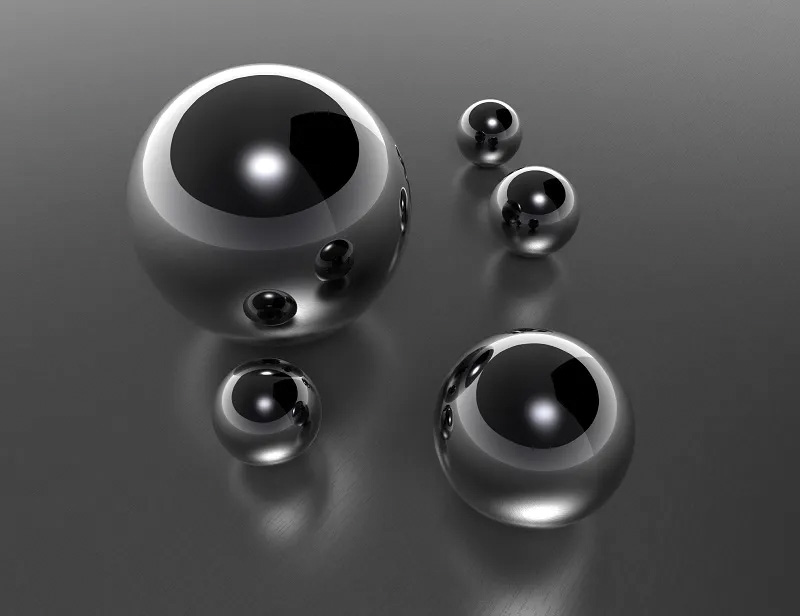
A Century Shaped by the Sphere
The sphere has long symbolized perfection. For Tsubaki Nakashima Co., Ltd., the sphere represents something far more tangible: a century-long commitment to precision, innovation, and performance.
The company’s origins trace back to 1913, when Leander J. Hoover founded the Hoover Steel Ball Company in Ann Arbor, Michigan — a pioneering force in precision steel balls for the growing automo-tive and bearing industries. In 1990, Japan’s Tsubaki Nakashima acquired the U.S. manufacturer, creat-ing what is today the world’s largest precision ball supplier.
From the “great age of steel” to the era of advanced ceramics, Tsubaki Nakashima has continuously evolved to meet the changing demands of global industries — from traditional combustion vehicles to electric vehicles (EVs), aerospace systems, medical devices, and defense applications.
Today, with 19 global locations and ceramic specialty divisions in the United States, Japan, and Thai-land, the company stands at the forefront of high-performance rolling element technology.
The Rise of Silicon Nitride: A New Frontier in Bearings
Ceramic balls have emerged as a breakthrough solution in high-speed and high-performance applica-tions. Manufactured using Aluminum Oxide, Zirconium Oxide, and Silicon Nitride, these materials de-liver efficiency levels beyond traditional steel components.
Among them, Silicon Nitride (Si₃N₄) balls have proven to be the most advanced and versatile.
Tsubaki Nakashima produces silicon nitride balls in sizes ranging from 0.5 mm to 86 mm, serving appli-cations such as:
- Hybrid bearings
- Machine tools
- Electric motors
- EV drivetrains and battery systems
- Fuel injection systems
- Wind energy equipment
- Valves and high-speed instrumentation
Silicon nitride production has been instrumental in positioning Tsubaki Nakashima as a key supplier for major global EV platforms, where efficiency, weight reduction, and electrical insulation are critical.
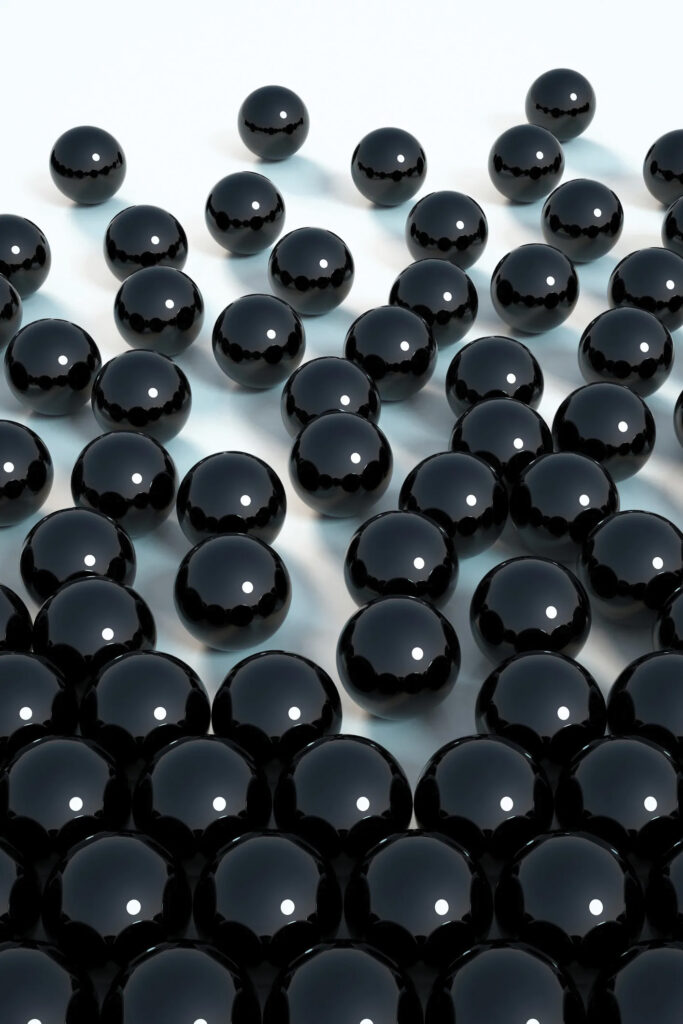
Manufacturing Excellence: From Blank to Precision
The production of silicon nitride balls begins with sintered ceramic blanks created under extreme temperature and pressure in an inert atmosphere. Using both Hot Isostatic Press (HIP) and Cold Isostatic Press (CIP) processes, the company ensures uniform density and structural integrity across all sizes.
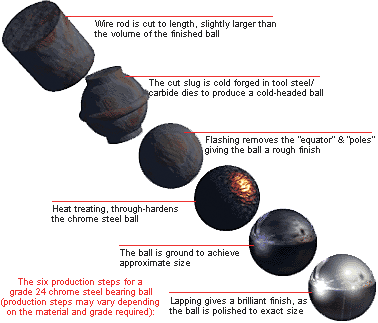
The manufacturing process follows several highly controlled stages:
- Grinding
Removes surface imperfections by rolling blanks between hard alloy plates under high pressure. - Lapping
Flashed balls are rolled between cast iron plates — one stationary and one rotating slowly — to refine sphericity and size. At this stage, geometry is established and inspected according to ASTM F2094 standards and customer specifications. - Polishing
Enhances surface finish, achieving ultra-low roughness values. - Inspection
Tsubaki Nakashima has developed a proprietary automated inspection system — the result of more than a decade of R&D — to reduce human error, improve throughput, and ensure unmatched consistency.
Quality control begins at the raw material stage. The company selects premium rare-earth minerals, as mineral purity directly influences density, hardness, and rupture strength — essential for meeting CLASS 1 performance per ASTM standards.
Performance Advantages Over Steel
Silicon nitride balls deliver transformative advantages compared to traditional steel rolling elements.
Lightweight Performance
At 60% lighter than steel, silicon nitride reduces centrifugal forces, skidding, and wear under high-speed conditions. This enables faster acceleration and reduced energy consumption — critical in EVs and aerospace.
Electrical Insulation & Anti-Magnetic Properties
Ceramic balls prevent electric current passage and eliminate electrical arcing — a major issue in EV motors and high-frequency applications.
Superior Wear & Corrosion Resistance
Silicon nitride withstands aggressive chemicals and extreme environments, making it ideal for aerospace, defense, and industrial systems.
High Temperature Capability
With operational stability up to +1400°C and resistance to extreme cold, silicon nitride retains hardness and strength where steel would fail. Its thermal expansion coefficient is only 29% of comparable steel rolling elements, enabling more accurate preload and dimensional stability.
Low Friction & Cooler Operation
The material’s low coefficient of friction improves lubrication performance, reduces noise, and lowers operating temperatures — even in marginal lubrication conditions.
Exceptional Mechanical Properties
- Density: 3.2 g/cc
- Flexural strength: 1.0 GPa
- Fracture toughness: 6 MPa/m²
- Modulus of elasticity: 50% higher than steel
- Higher stiffness reduces deflection under load, increasing bearing rigidity and reliability.
Superior Surface Finish
With Ra values between 0.17–0.25 micro-inches, silicon nitride balls can extend L-10 bearing life by up to ten times compared to steel counterparts.
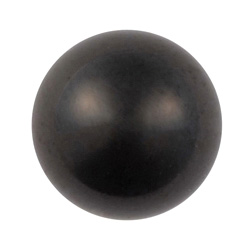
Powering the Next Generation of Applications
- Silicon nitride balls are increasingly deployed in:
- EV engines and transmissions
- EV battery systems
- Aerospace mechanisms
- Military and defense systems
- High-speed machine tools
- Precision measurement instruments
- Pumps and fuel systems
- Food processing equipment
- High-performance racing
As industries push for higher speeds, lower emissions, and greater energy efficiency, hybrid and full-ceramic bearing systems are becoming indispensable.
Precision as a Philosophy
For Tsubaki Nakashima Co., Ltd., the sphere is not merely geometry — it is engineering philosophy. Through continuous refinement of materials, automation, and quality systems, the company has transformed ceramic rolling elements into mission-critical components for the most demanding global industries.
In a world shifting toward electrification, sustainability, and extreme-performance engineering, silicon nitride balls represent not just an upgrade — but a leap forward.
And in that perfectly engineered sphere lies the future of motion.