
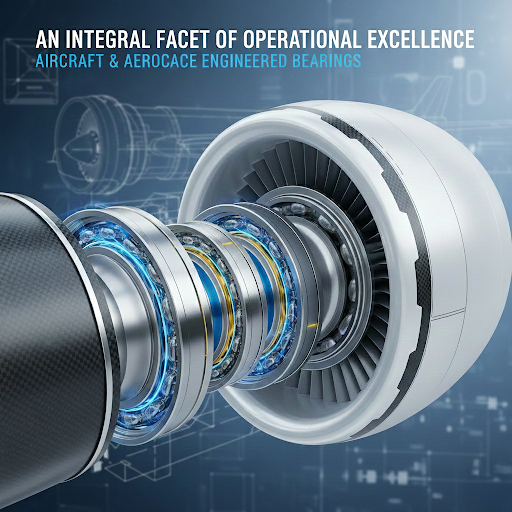
In the high-stakes world of aviation and aerospace, even the smallest components can define success or failure. While engines, wings, and avionics often capture headlines, there are engineering marvels at an even more fundamental level that quietly enable flight: aerospace engineered bearings. These unassuming parts are indispensable in every aircraft, from commercial jets cruising at 35,000 feet to cutting-edge spacecraft bound for orbital missions. At the forefront of this niche yet mission-critical segment is NBC Bearings, a stalwart of Indian engineering whose contributions highlight how precision technology underpins safer, more efficient flight.
The Unsung Mechanics Behind Every Flight
In aviation engineering, the term “bearing” conjures images of tiny metal rings and spheres but their role is anything but small. Aerospace bearings are engineered components designed to support rotating or moving parts while minimizing friction, handling extreme loads, and enduring punishing environments. These bearings appear in the heart of jet engines, flight control systems, landing gear, actuators, cabin mechanisms, and even auxiliary systems whose failure could ripple into operational risk.
Unlike ordinary industrial bearings used in factory conveyor belts or automotive wheels, aerospace bearings must operate flawlessly under some of the harshest conditions imaginable:
- Extreme temperatures, ranging from sub-zero altitudes to scorching turbine cores.
- High dynamic loads during takeoff, turbulence, and landing.
- Rapid rotational speeds in engines and auxiliary systems.
- Persistent vibration and shock inherent in aircraft operations.
Standard bearings simply can’t meet these demands. Aerospace bearings are engineered with specialized materials and advanced manufacturing precision to stay reliable where safety is non-negotiable.
Why Precision Bearings Matter in Aviation
- Pillars of Safety and Reliability
Every control surface whether ailerons, rudders, or elevators hinges on motion systems that depend on bearings to function accurately. Engine assemblies alone contain dozens of bearings that must tolerate colossal centrifugal forces and razor-thin clearance tolerances. A single bearing failure in critical flight systems can cascade into serious safety risks. Aerospace bearings thus are engineered to exacting standards, often exceeding those for automotive or industrial products. Beyond load-bearing, these components must offer consistent performance over thousands of flight cycles because there are no second chances at 40,000 feet. - Efficiency: Reducing Drag One Turn at a Time
Aircraft engineers strive ceaselessly to reduce weight and fuel burn. Here, bearings play a surprisingly strategic role. Low-friction bearing designs reduce energy loss in moving parts, meaning less heat, better fuel efficiency, and longer maintenance intervals. Over millions of flight hours, these efficiencies translate to tens of thousands of dollars in savings and a meaningful reduction in environmental impact.
Lightweight yet high-strength materials like high-chromium steel, titanium alloys, and hybrid ceramics help deliver this balance delivering robust performance without excessive weight penalties.
From Engines to Auxiliaries: Where Bearings Power Flight
Aerospace engineered bearings are woven into nearly all systems onboard:
- Jet Engines: Bearings in fan spools and turbine sections ensure balance and stability at rotational speeds exceeding tens of thousands of RPM.
- Flight Controls: Precision bearings enable smooth actuation of control surfaces, contributing directly to responsiveness and pilot confidence.
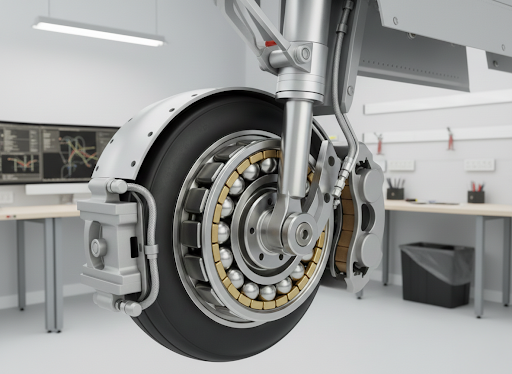
- Landing Gear: Heavy impact loads and corrosion from ground conditions demand bearings with high durability and wear resistance.
- Actuators & Hydraulic Systems: These systems rely on bearings for consistent motion transfer under complex mechanical stresses.
- Cabin & Support Systems: Even non-critical components such as seating assemblies and cargo doors benefit from engineered bearing solutions proving that precision matters from the cockpit to the cabin.
Engineering Beyond Ordinary: What Makes Aerospace Bearings Different
Engineering aerospace bearings goes far beyond typical machine shop practices. It’s a multi-disciplinary craft involving advanced materials science, ultra-precise machining, and rigorous testing protocols:
Advanced Materials
To endure extreme environments, aerospace bearings leverage specialty alloys and composites with superior hardness, fatigue resistance, and thermal stability. Critical material choices from M50 tool steels to ceramics help bearings resist wear and maintain dimensional stability at high speeds.
Precision Manufacturing
Achieving micron-level tolerances and perfect surface finishes is central to aerospace bearing performance. Highly automated grinding, balancing, and heat-treatment processes, coupled with stringent non-destructive inspection methods, ensure each bearing meets exact specifications before certification.
Global Quality Standards
Aerospace bearings are not just engineered they are certified. Manufacturers must comply with internationally recognized standards such as AS9100 and NADCAP, plus regulatory frameworks from aviation authorities like the FAA and EASA. These certifications validate traceability and performance across an aircraft’s lifecycle.
A Strategic Role for India’s Aerospace Ambitions
For companies like NBC Bearings India’s pioneering bearing manufacturer since 1946 and a respected exporter to more than 30 countries aerospace engineering represents both innovation and national strategic importance. Over decades, the company has developed specialized bearings, advanced R&D capabilities, and responsive design practices that align with global aerospace demands.
In an era defined by aerospace electrification, automation, and efforts like “Atmanirbhar Bharat,” locally developed bearing technologies help reduce reliance on imports while strengthening the domestic supply chain. Partnerships with research institutes and global expertise further position such technologies at the cutting edge of aviation manufacturing.
Conclusion: Bearings as Enablers of Flight
Invisible yet indispensable, engineered aerospace bearings are the silent champions of modern flight. Their precision ensures that aircraft operate reliably, efficiently, and safely mile after mile, flight after flight.
As aerospace technology advances, these components will continue to evolve, enabling lighter, greener, and more capable aircraft and spacecraft. And while engines and avionics grab the spotlight, it’s the bearings quietly doing their job that keep aviation aloft.
For more info:
www.nbcbearings.com