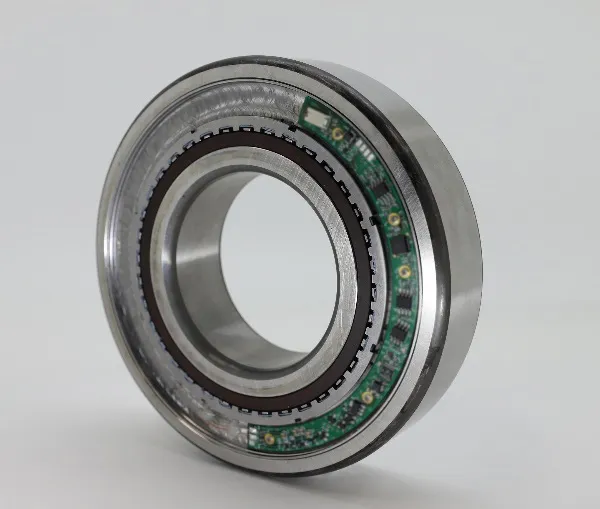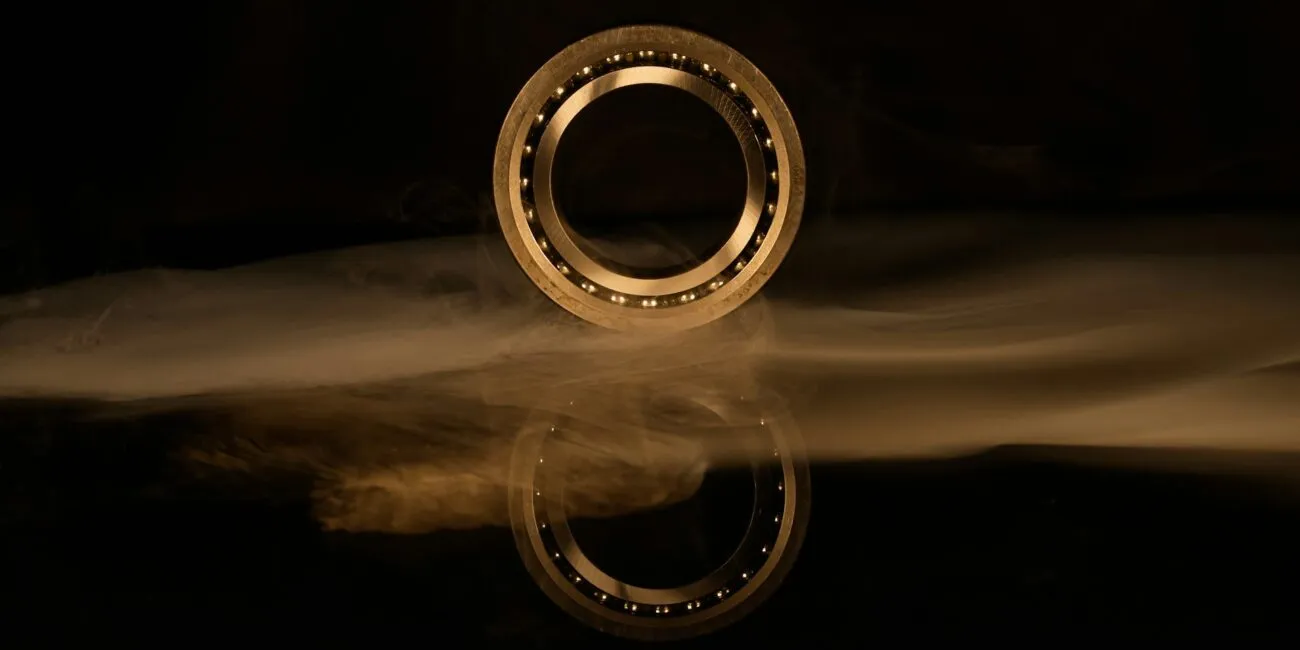
Ball bearings are essential components in modern engineering, enabling smooth rotational movement, reducing friction and improving the efficiency of machinery across industries.
Advanced Materials Enhance Bearing Performance
Material innovation is playing a significant role in improving bearing performance under demanding operating conditions. Conventional bearing steel remains widely used because of its strength, durability and cost-effectiveness. However, applications involving high speeds, elevated temperatures, corrosion or electrical interference increasingly require specialised material solutions.
Ceramic bearings and hybrid bearings, which combine ceramic rolling elements with steel rings, offer advantages in selected high-speed and electrically demanding applications. Ceramic materials are generally lighter than steel and provide excellent hardness and corrosion resistance. Hybrid designs can also help reduce the risk of electrical current damage in electric motor applications when appropriately specified.
These characteristics make hybrid bearings particularly relevant to electric vehicles, precision machine tools, industrial motors and other applications where reliability and efficiency are critical. The selection of materials, however, depends on operating speed, load, lubrication, temperature and environmental conditions.
Surface Engineering Reduces Friction and Wear
Advanced surface treatments and coatings are helping manufacturers improve bearing durability and performance. Specialised coatings, including diamond-like carbon, can reduce friction and wear in suitable applications while providing protection against certain forms of surface damage.
Such technologies are valuable in systems where conventional lubrication presents challenges or where components operate under demanding conditions. By improving surface characteristics, engineers can address specific failure mechanisms, increase component reliability and potentially extend service intervals.
Coating performance depends on the bearing design, substrate material, application method and operating environment. Consequently, engineering assessment is essential to ensure that a coating delivers measurable benefits under actual working conditions.
Precision Manufacturing Improves Reliability
Modern bearing manufacturing relies on sophisticated machining, grinding, finishing and inspection processes. Tight dimensional tolerances and carefully controlled surface finishes help achieve smooth rotation, consistent load distribution and reduced vibration.
Computer-controlled production equipment enables manufacturers to maintain repeatability across large production volumes. Advanced metrology systems measure critical dimensions, while automated inspection technologies identify surface defects and manufacturing variations that could affect performance.
Quality control extends beyond dimensional accuracy. Hardness testing, material verification, noise and vibration measurements, and performance testing help establish whether a bearing meets its specified requirements.
Automation Strengthens Production Consistency
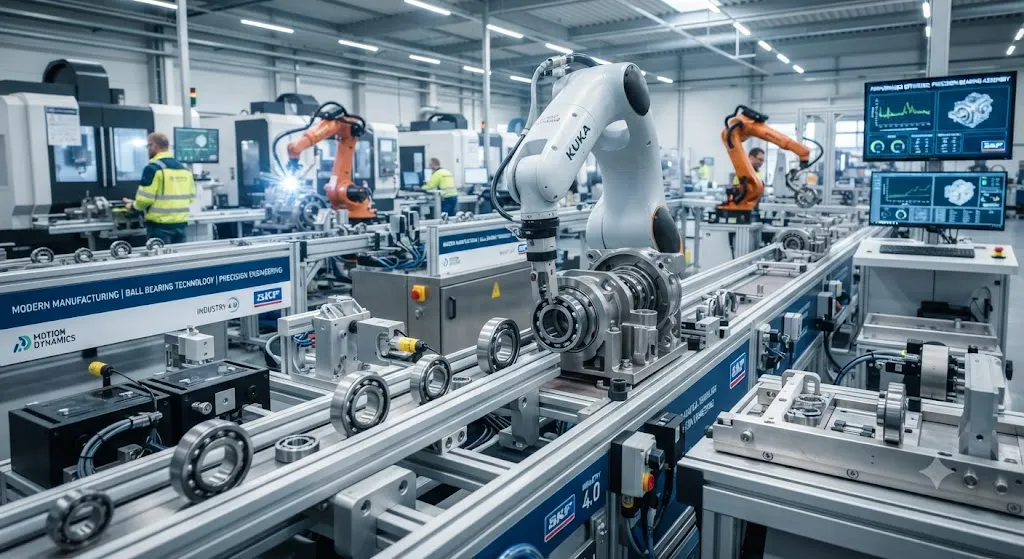
Robotic handling and automated assembly systems are increasingly supporting bearing manufacturing. By reducing variability in repetitive tasks, automation helps manufacturers improve production consistency, workplace safety and operational productivity.
Machine vision systems can inspect components for visible defects, dimensional irregularities and assembly issues. When integrated with manufacturing data, these systems can also help identify recurring defects and support corrective action.
Automation is particularly valuable when combined with skilled engineering oversight. Effective process control, equipment calibration and preventive maintenance remain essential to ensuring consistent output and dependable product quality.
Smart Bearings Support Predictive Maintenance
One of the most important developments in bearing technology is the integration of condition monitoring with industrial maintenance systems. Traditional maintenance strategies often rely on fixed replacement schedules or inspections conducted at predetermined intervals. These approaches can lead to unnecessary component replacement or unexpected failures between inspections.
Modern monitoring systems use sensors to measure parameters such as vibration, temperature and rotational speed. Analysing these measurements helps maintenance teams identify abnormal operating conditions and detect potential bearing deterioration at an early stage.
When connected to industrial Internet of Things platforms, monitoring systems can transmit operating data to central dashboards. Engineers can use this information to evaluate equipment health, prioritise maintenance activities and plan interventions before a minor issue develops into a major breakdown.
Artificial intelligence and machine learning can further support this process by identifying patterns in historical and real-time equipment data. However, accurate predictions depend on suitable sensors, reliable data and models validated for the specific machinery and operating environment.
Energy Efficiency and Sustainability Gain Importance
Energy efficiency is becoming a central consideration in industrial equipment design. Bearings influence the energy required to maintain rotational movement, making friction reduction an important factor in improving overall machine performance.
Appropriate bearing selection, effective lubrication, correct alignment and proper installation can help reduce friction-related losses. In continuously operating industrial systems, even incremental efficiency improvements can contribute to lower energy consumption and operating costs.
Sustainability also depends on component durability and maintenance practices. Longer service life can reduce replacement frequency, material consumption and waste. Manufacturers are therefore focusing on improved materials, efficient production processes and designs that support dependable operation over extended periods.
The environmental benefits of a bearing solution must nevertheless be assessed across its lifecycle, including manufacturing, lubrication, maintenance and eventual replacement.
Digitalisation Shapes the Next Generation of Bearings
The future of bearing technology will increasingly combine mechanical engineering with digital intelligence. Sensor-integrated bearings, connected monitoring platforms and advanced analytical tools are enabling manufacturers to understand equipment behaviour more accurately.
Digital manufacturing systems can also connect production records, inspection results and component traceability. This information supports quality investigations, process improvement and more informed maintenance decisions.
Meanwhile, advances in materials science, surface engineering and manufacturing methods continue to create opportunities for specialised bearing designs. Additive manufacturing may enable selected complex geometries and integrated features, although conventional manufacturing remains essential for many high-precision bearing components.
For industrial operators, the greatest opportunity lies in combining proven bearing engineering with data-driven maintenance and effective equipment management.
Ball bearing technology is evolving from a focus on mechanical performance towards a broader approach that integrates precision engineering, materials innovation, digital monitoring and sustainability. These advances are helping industries improve reliability, manage maintenance costs and enhance manufacturing productivity.
As factories become more connected and equipment requirements grow increasingly demanding, selecting the right bearing technology will remain essential. Companies that combine appropriate product selection with correct installation, lubrication and condition monitoring will be better positioned to improve equipment availability and achieve long-term operational efficiency.