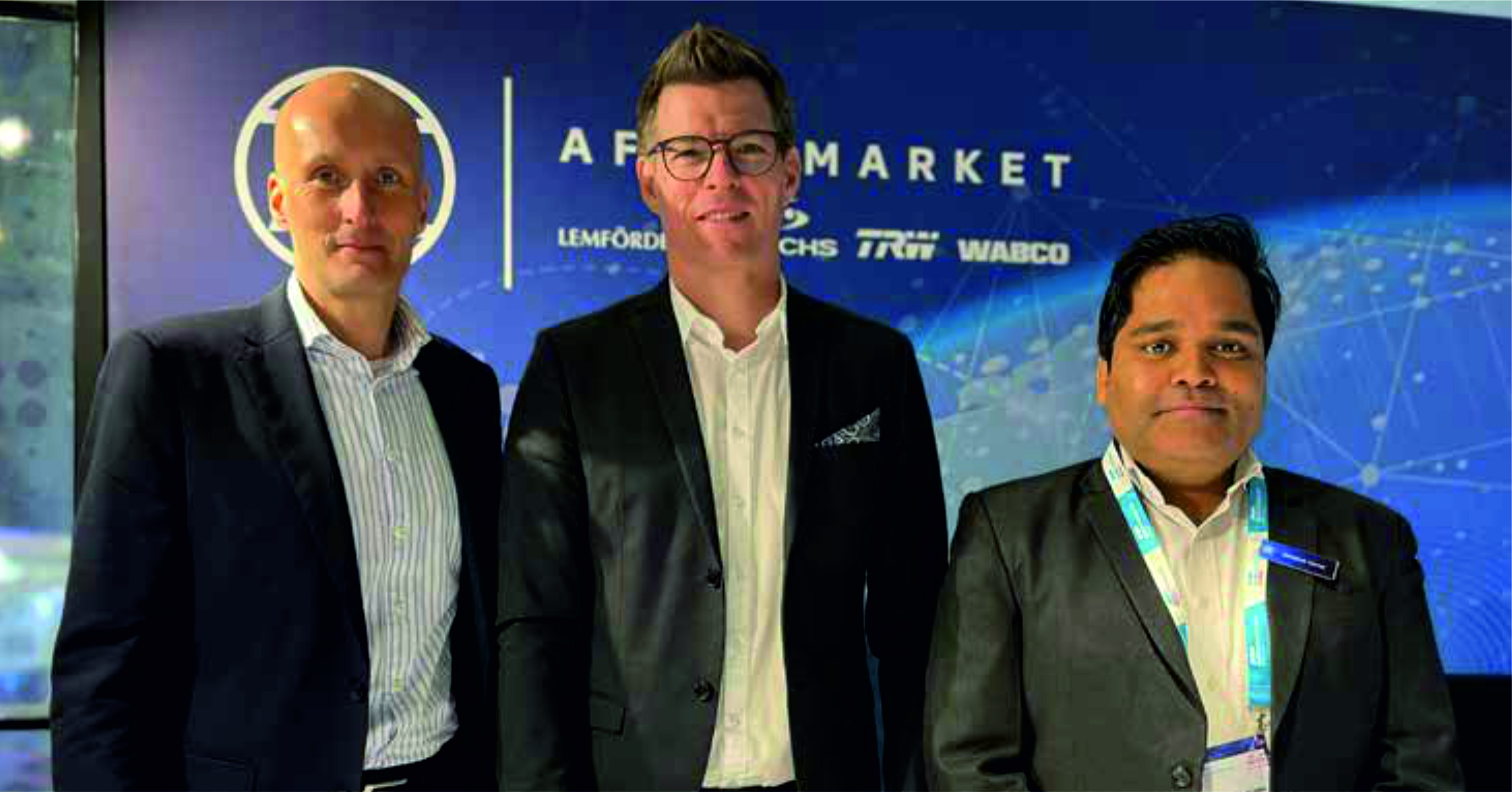

The Automotive Component Manufacturers Association of India (ACMA) has outlined a strengthened focus on resilience, localisation and technology-led innovation as the Indian auto component industry navigates a period of significant global and domestic transformation. With geopolitical shifts, supply chain restructuring and accelerating electrification reshaping the global mobility landscape, the association’s leadership emphasised that India must act decisively to secure its long-term competitive edge.
A senior ACMA spokesperson noted that the latest leadership appointments come at a pivotal moment, as the auto component sector adapts to an increasingly complex global environment. Manufacturers around the world are re-evaluating sourcing strategies, diversifying supply bases and seeking long-term stability — trends that create both opportunities and challenges for India. At the same time, the rapid transition toward electric and sustainable mobility is heightening the industry’s need for advanced materials, electronics and new-technology components.
“The new leadership comes at a decisive moment for our industry,” the spokesperson said. “The auto component sector is navigating geopolitical volatility, supply chain realignments and accelerating electrification. Their proven leadership will be invaluable in steering ACMA’s agenda on strengthening India’s global competitiveness, securing critical raw materials and fostering R&D and innovation. We are confident that under their stewardship, ACMA will further our industry’s vision of building a resilient, sustainable, and future-ready mobility ecosystem.” The spokesperson also highlighted that ACMA aims to intensify its collaboration with the government, OEMs and global partners to advance policy support, technology development and supply chain diversification. Ensuring access to critical raw materials—such as rare earths, battery minerals and electronic components—will remain a priority, especially as the country scales up its EV manufacturing capabilities.
Addressing the industry’s outlook, Mr. Vikrampati Singhania, President, ACMA, said the association is committed to accelerating India’s transition into a global manufacturing and technology hub for next-generation mobility components. He emphasised that India is witnessing unprecedented momentum in automotive exports, localisation efforts and EV adoption, creating a conducive environment for long-term sectoral growth.“It is a privilege to lead ACMA at a time when India is rapidly emerging as a trusted global partner in mobility value chains,” Mr. Singhania said. “With exports crossing record highs and EV adoption reshaping the market, our task is to strengthen resilience and competitiveness. We must deepen localisation, invest in advanced technologies, and embrace sustainability as a core business imperative.” He emphasised three strategic priorities that will define the sector’s growth trajectory over the next decade:
1. Deepening localisation and building domestic capabilities in electronics, powertrain components, lightweight materials and precision engineering.
2. Scaling investments in R&D and advanced technologies, including power electronics, thermal management, safety systems and digital manufacturing.
3. Embedding sustainability across operations, with a focus on circularity, renewable energy and responsible manufacturing practices.
Mr. Singhania added that the Production-Linked Incentive (PLI) Scheme, government support for EV and hydrogen technologies, and the broader ‘Make in India’ framework have created strong tailwinds for the industry. However, he stressed that the sector must build long-term innovation competitiveness—not just cost competitiveness—to secure its place in the global mobility ecosystem.“Together, with the government’s continued support and our industry’s commitment, we will work towards making India not only self-reliant but also a global leader in the next generation of mobility components,” he said. ACMA reiterated that it will continue to drive initiatives in skill development, MSME support, technology readiness and global market expansion. With sustainability and energy transition becoming central to the global auto industry, the association plans to focus on circular manufacturing, recycling ecosystems and green supply chains as key pillars of growth. The Automotive Component Manufacturers Association of India (ACMA) is the apex body representing the Indian automotive component industry. With over 1,100 member companies, ACMA accounts for more than 90% of the organised sector’s turnover and works closely with government, industry and global partners to strengthen India’s mobility ecosystem.
For Further Information:
ACMA: Upender Singh 9901259169
Upender.singh@acma.in
Archetype : Swetank Kumar 9818564004
swetank.kumar@archetype.co
Prerna Rao 9873879787
prerna.rao@archetype.co