Bearings may appear similar at first glance, but their performance varies greatly depending on design, load direction, and application. Selecting the right bearing is critical to machine efficiency, durability, and safety. From handling heavy radial loads to managing complex axial forces, each bearing type is engineered for a specific role. This feature explores the major categories of bearings, how they differ, and where each type delivers the greatest value.
How Bearings Are Categorized
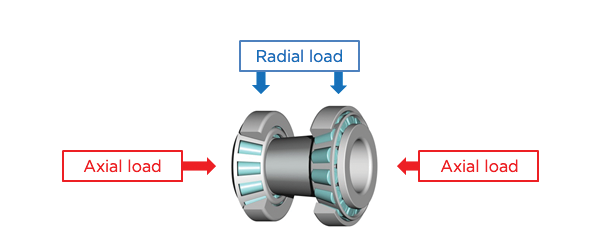
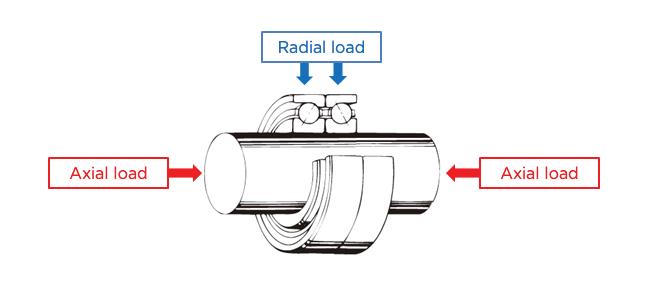
Bearings are primarily classified based on the direction of force (load) they support and the shape of their rolling elements. In real-world applications, bearings are constantly subjected to forces from multiple directions.
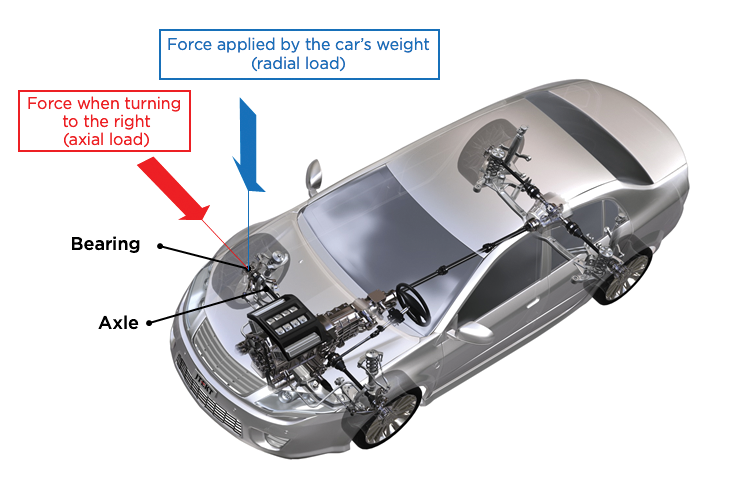
For example, in an automobile wheel:
- The vehicle’s weight applies force perpendicular to the axle—this is known as a radial load.
- During cornering, centrifugal force acts along the axle—this is called an axial load.Understanding these load directions is fundamental to choosing the right bearing.
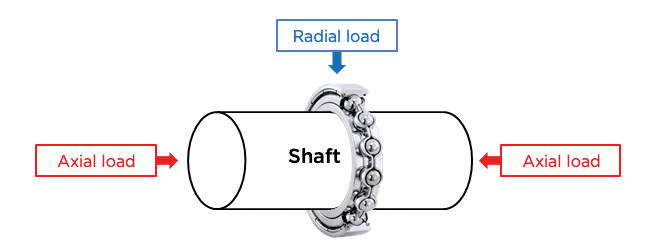
- Radial load: Force applied perpendicular to the shaft
- Axial load: Force applied parallel to the shaft
Based on these forces and rolling element design, bearings are broadly categorized into four main groups:
- Radial ball bearings
- Radial roller bearings
- Thrust ball bearings
- Thrust roller bearings
Among these, radial ball bearings and radial roller bearings are the most widely used across industries
Radial Ball Bearings: Versatile and Widely Used
Radial ball bearings are designed to support forces acting perpendicular to the shaft and are known for their versatility, low friction, and high-speed capability.
Deep Groove Ball Bearings
Deep groove ball bearings are the most commonly used bearing type. Their simple design allows them to support both radial loads and moderate axial loads from either direction simultaneously. This makes them ideal for electric motors, household appliances, automotive components, and industrial machinery.
Angular Contact Ball Bearings
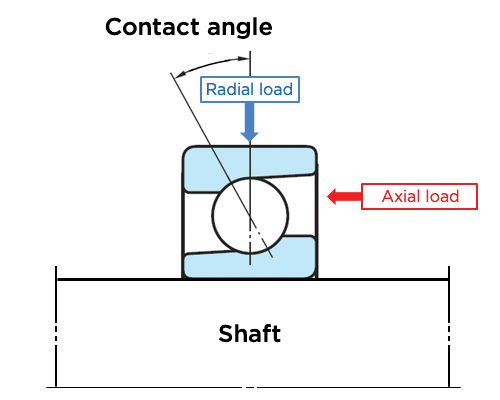
When applications require higher axial load capacity, angular contact ball bearings are the preferred choice. These bearings can handle radial loads and axial loads in one direction at the same time. For axial loads from both directions, angular contact bearings are often mounted in matched pairs or sets. Their defining feature is the contact angle, which determines how load is distributed between radial and axial directions, making them suitable for high-speed and precision applications such as machine tool spindles.
Radial Roller Bearings: Built for Heavy Loads
Radial roller bearings are engineered to support significantly higher loads than ball bearings. Their line contact between rollers and raceways enables superior load-carrying capacity, making them ideal for heavy-duty and impact-prone environments.
Cylindrical Roller Bearings
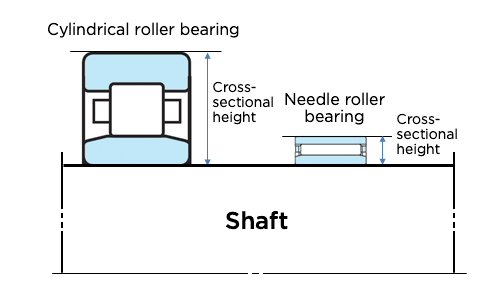
Using cylindrical rollers, these bearings can withstand very high radial loads and are commonly used in gearboxes, motors, and industrial machinery where shock loads are frequent.
Needle Roller Bearings
Needle roller bearings feature long, thin rollers with small diameters. Their compact cross-section allows designers to reduce machine size without sacrificing load capacity. These bearings are widely used in automotive transmissions, compressors, and space-constrained applications.
Tapered Roller Bearings
One of the most widely used roller bearing types, tapered roller bearings can support both radial loads and axial loads in one direction. Their tapered geometry allows efficient load distribution, making them ideal for automotive wheel hubs, gear systems, and heavy machinery. For axial loads in both directions, tapered roller bearings are installed in opposing pairs.
Spherical Roller Bearings
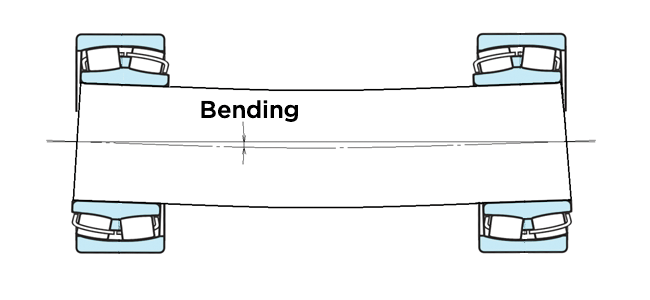
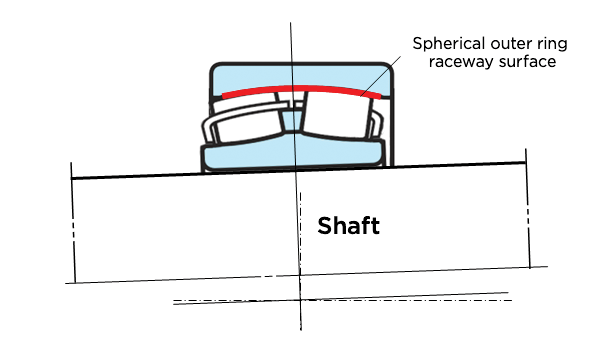
Designed to handle extremely heavy loads and shaft misalignment, spherical roller bearings use barrel-shaped rollers positioned between a spherical outer race and an inner race. This design allows the bearing to accommodate shaft deflection and misalignment while maintaining performance. These bearings are commonly used in mining equipment, conveyors, crushers, and other demanding industrial applications.
Choosing the Right Bearing
No single bearing fits all applications. The optimal bearing is selected by carefully evaluating:
- Load direction and magnitude
- Speed requirements
- Space limitations
- Shaft alignment conditions
- Operating environment
Using the correct bearing type ensures smoother operation, reduced wear, higher efficiency, and longer machine life.
Conclusion: Precision in Selection Drives Performance
Bearings are far more than simple mechanical components—they are precision-engineered solutions designed to meet specific operational demands. Understanding the differences between bearing types is essential for maximizing machine reliability and performance.
As industries evolve and machines face higher speeds, heavier loads, and harsher conditions, the importance of correct bearing selection continues to grow. At Spinex Bearings, this understanding drives innovation, quality, and reliability—ensuring that every application is supported by the right bearing, built for the right purpose.