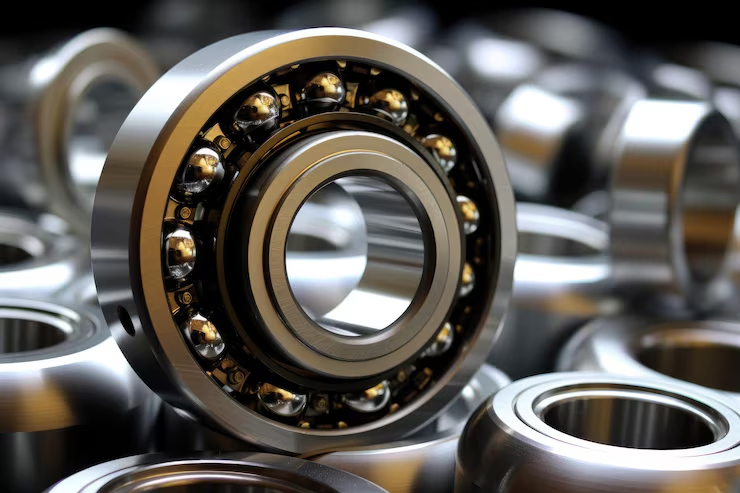
At the heart of every rotating machine lies a humble yet critical component the bearing. Traditionally designed to reduce friction and support motion, bearings have long operated as silent workhorses of industry. Today, however, a technological shift showcased at Hannover Messe is redefining their role. Innovations like the “from standard bearing to sensor” concept are transforming conventional bearings into intelligent data-generating assets, unlocking new possibilities in predictive maintenance, efficiency optimization, and digital manufacturing.
The evolution from standard bearings to sensor-enabled systems marks a significant milestone in industrial engineering. At the forefront of this transformation is technology developed by HCP Sense GmbH, which enables standard rolling bearings to function as real-time sensors without altering their physical design. This breakthrough addresses one of the most persistent challenges in industrial monitoring: obtaining accurate, real-time data from within critical mechanical components.
Unlike traditional condition-monitoring systems that rely on external sensors, this innovation leverages the intrinsic electrical properties of the bearing itself. By measuring electrical impedance within the bearing, the system can analyze key operational parameters such as load, lubrication condition, and early signs of damage. This non-invasive approach eliminates the need for additional hardware or complex redesign, making it both cost-effective and easy to integrate into existing machinery.
The implications of this technology are far-reaching. Bearings are often the first components to exhibit signs of wear or failure, yet conventional monitoring methods frequently fail to capture the root causes of damage. With sensor-integrated bearings, operators gain unprecedented visibility into internal processes, enabling them to detect anomalies at an early stage and take corrective action before costly breakdowns occur.
One of the most compelling advantages of this innovation is its role in predictive maintenance. By continuously monitoring lubrication and load conditions, the system can estimate remaining service life and optimize maintenance schedules. This shift from reactive to proactive maintenance reduces downtime, extends equipment lifespan, and significantly lowers operational costs. Furthermore, improved lubrication monitoring directly contributes to energy efficiency an essential factor given that a substantial portion of global energy consumption is lost to friction.
Another key benefit lies in design and operational optimization. Engineers can use real-time data from sensor bearings to validate simulation models, refine machine configurations, and enhance overall system performance. This capability is particularly valuable in industries such as automotive, wind energy, and heavy manufacturing, where precision and reliability are paramount.
The simplicity of integration further strengthens the case for adoption. Since the technology works with standard bearing geometries, it can be retrofitted into existing systems or incorporated into new designs without requiring additional space. A minimal electrical connection is sufficient to enable data collection, making the solution both scalable and adaptable across a wide range of applications.
Beyond operational efficiency, sensor bearings are also paving the way for new digital business models. Manufacturers can offer value-added services such as condition monitoring, performance analytics, and predictive maintenance as part of their product ecosystem.
This shift aligns with the broader Industry 4.0 vision, where physical components are seamlessly integrated into digital networks to create smarter, more responsive production environments.
In essence, the transition from standard bearings to sensor-enabled systems represents more than just a technological upgrade it signifies a fundamental change in how machines are monitored, maintained, and optimized. As industries continue to embrace digital transformation, intelligent components like sensor bearings will play a pivotal role in shaping the factories of the future.
The bearing, once a passive element, is now becoming an active source of insight proving that even the smallest components can drive the biggest innovations.
For more info :
www.hcp-sense.com