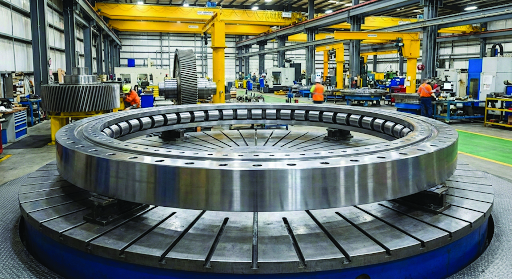
Large diameter bearings are the backbone of heavy industrial machinery, supporting enormous loads in some of the world’s most demanding operating environments. From wind turbines and steel mills to mining equipment and power plants, their reliability directly impacts productivity, safety, and operational efficiency, making failure prevention a strategic priority.
In modern industry, the performance of large diameter bearings often determines the reliability of entire production systems. These precision-engineered components are designed to support heavy radial and axial loads while enabling smooth rotational movement in critical equipment. Whether installed in wind turbines, rotary kilns, mining crushers, marine systems, or power generation facilities, large diameter bearings operate under extreme conditions where even minor failures can result in costly downtime and significant operational disruption.
The challenge lies in the demanding environments in which these bearings function. Heavy loads, fluctuating temperatures, shock forces, contamination, and continuous operation place immense stress on bearing components. Over time, factors such as inadequate lubrication, contamination, misalignment, overloading, and improper installation can accelerate wear and lead to premature failure. Industry experts consistently identify lubrication-related issues as one of the leading causes of bearing damage, emphasizing the importance of proper maintenance practices.
A proactive approach to failure prevention begins at the design and manufacturing stage. Advanced metallurgy, precision heat treatment, and high-accuracy machining play a crucial role in enhancing bearing durability. Optimized surface finishes reduce friction and wear, while engineered cage designs improve stability under heavy loads. These manufacturing improvements help bearings withstand harsh operating conditions while maintaining performance over extended service intervals.
Equally important is the implementation of predictive maintenance strategies. Rather than waiting for a bearing to fail, modern industries increasingly rely on condition-monitoring technologies to detect early warning signs. Vibration analysis, temperature monitoring, lubricant health assessments, and wear-pattern inspections provide valuable insights into bearing performance. By identifying abnormalities before they develop into serious problems, maintenance teams can schedule corrective actions and avoid unexpected shutdowns.
Lubrication remains one of the most effective tools for extending bearing life. Selecting the correct lubricant, maintaining appropriate lubrication intervals, and preventing contamination are essential for minimizing friction and protecting rolling elements. Automated lubrication systems are becoming increasingly common in heavy industries, ensuring consistent lubricant delivery while reducing the risk of human error. Effective sealing solutions further enhance reliability by preventing the ingress of dust, moisture, and other contaminants that can compromise bearing performance.
Installation practices also have a significant influence on bearing longevity. Improper mounting techniques, excessive force during assembly, and poor alignment can introduce hidden damage that may not become apparent until much later in operation. Following established installation procedures, using specialized mounting tools, and maintaining clean working conditions help eliminate many of the common causes of premature failure. Proper storage and handling are equally important, particularly for large bearings that require careful support and protection before installation.
As industries continue to demand higher productivity and greater equipment reliability, the focus on bearing failure prevention will only intensify. By combining advanced engineering, precision manufacturing, predictive maintenance, effective lubrication, and proper installation practices, organizations can significantly extend bearing life and reduce total operating costs. In a competitive industrial landscape, preventing failure is no longer simply a maintenance objective it is a strategic advantage that drives efficiency, safety, and long-term operational success.
For more info:
www.nbcbearings.com