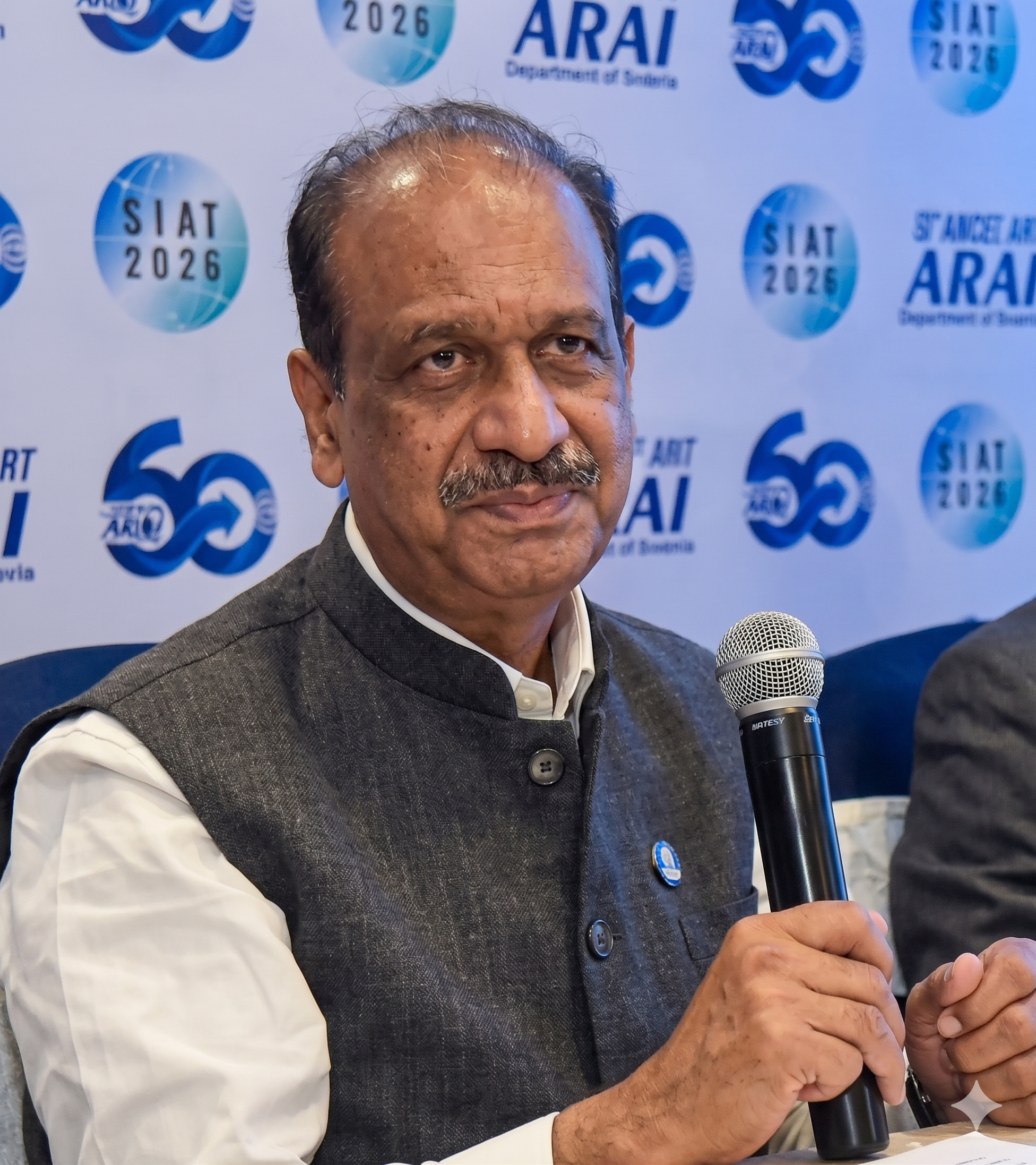
Reji Mathai ARAI director
In a significant step toward advancing sustainable mobility, the Automotive Research Association of India (ARAI) has announced plans to establish a dedicated hydrogen internal combustion engine (IC) development facility by 2027. The initiative signals a growing commitment within India’s automotive ecosystem to explore alternative propulsion technologies that align with global decarbonization goals while leveraging existing engine architectures.
The announcement comes as part of ARAI’s broader research and development roadmap, which focuses on emerging automotive technologies and future-ready solutions. According to ARAI Director Reji Mathai, the organization has already initiated multi-disciplinary research across key areas, including hydrogen fuel applications, vehicle safety enhancements, and emission reduction strategies. The hydrogen IC engine facility is expected to act as a cornerstone for these efforts, enabling testing, validation, and optimization of hydrogen-powered engines tailored for Indian conditions.
Hydrogen internal combustion engines are increasingly being viewed as a complementary pathway to battery electric vehicles (BEVs) and fuel cell electric vehicles (FCEVs). Unlike fuel cells, hydrogen IC engines can be developed using modified conventional engine platforms, making them particularly attractive for segments such as commercial vehicles, off-highway equipment, and long-haul transport where electrification faces practical challenges. By investing in this technology, ARAI aims to accelerate industry readiness while supporting manufacturers in transitioning toward cleaner fuels without completely overhauling existing infrastructure.
Beyond hydrogen research, ARAI is actively engaged in addressing broader environmental and safety concerns. The organization has conducted extensive studies on air pollution sources, particularly in urban centers like Pune, and has submitted detailed reports to municipal authorities. These findings are expected to guide policy interventions and urban planning measures aimed at improving air quality.
In parallel, ARAI continues to strengthen its capabilities in advanced automotive testing and data analytics. Through initiatives such as MARG 2.0, the institute employs sensor-based technologies and Geographic Information Systems (GIS) to measure road conditions using global standards like the International Roughness Index (IRI). With data collected from tens of thousands of kilometers of roads across multiple states, this program supports vehicle design optimization, ride comfort analysis, and durability assessments.
The upcoming hydrogen facility also complements ARAI’s expanding infrastructure portfolio. Recent additions include specialized laboratories for battery testing, advanced driver assistance systems (ADAS), and component validation. These facilities are designed to cater to evolving industry requirements, ensuring that Indian manufacturers remain competitive in a rapidly transforming global market.
Industry experts see ARAI’s hydrogen IC initiative as both timely and strategic. As governments worldwide push for net-zero emissions, the need for diverse technological solutions has become increasingly evident. Hydrogen, with its high energy density and zero carbon emissions at the point of use, offers a viable alternative especially when produced through renewable sources. However, challenges such as storage, distribution, and cost efficiency remain critical hurdles. Facilities like the one proposed by ARAI are expected to play a vital role in overcoming these barriers through research, standardization, and collaboration.
Moreover, the initiative aligns with India’s national hydrogen mission, which aims to position the country as a global hub for green hydrogen production and utilization. By focusing on hydrogen IC engines, ARAI is not only supporting environmental objectives but also enabling a pragmatic transition pathway for the automotive sector.
As the 2027 timeline approaches, the hydrogen IC engine facility is poised to become a key enabler of innovation, bridging the gap between conventional powertrains and next-generation mobility solutions. With continued investment in research and cross-industry partnerships, ARAI’s efforts could redefine how India approaches clean transportation balancing sustainability, scalability, and technological feasibility.