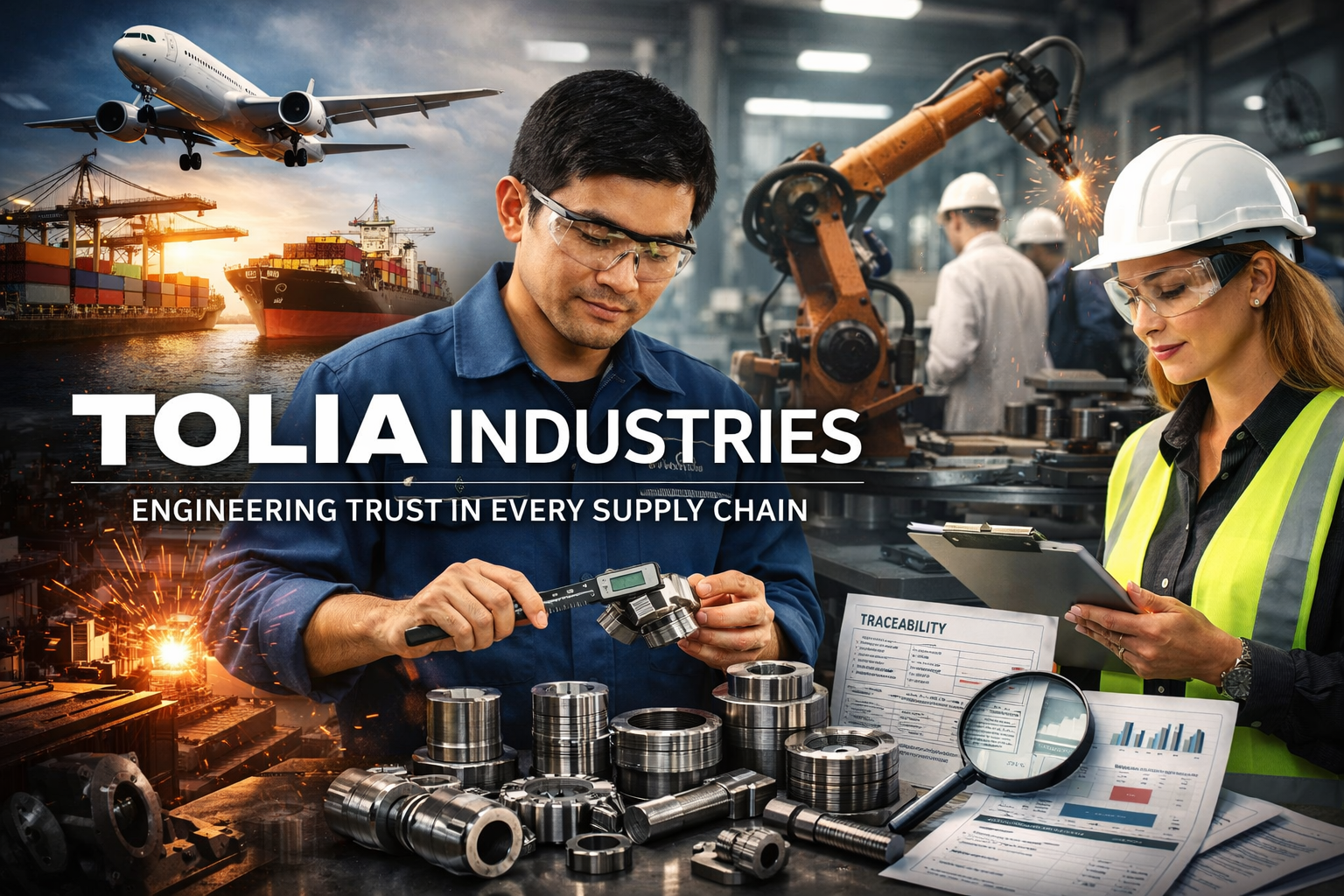
In global supply chains, different buying models exist for good reasons. Traders play a vital role speed, convenience, consolidation, local stocking, and bridging gaps when customers need quick fulfillment. At the same time, for applications where performance, traceability, and repeatability are mission-critical, many customers prefer the added assurance that comes from working directly with the manufacturer. Below are the real pain points we hear from customers and how we support them, whichever route they choose.
1) Q: “Why do some buyers prefer to work directly with the manufacturer?”
A: Direct manufacturing relationships are often chosen when customers want process ownership stable production methods, repeatable outcomes, and deeper technical support. It’s not about who sells; it’s about how much control is needed over the process behind the part.
2) Q: “Where do traders add value in the supply chain?”
A: Traders are often excellent partners for availability, consolidation, local support, mixed-item procurement, smaller lot needs, and fast movement especially when customers need flexibility and speed.
3) Q: “So when does manufacturer-direct make the most sense?”
A: When the application is high-risk or approval-driven, think performance-sensitive assemblies, audit requirements, or where a single nonconforming lot can cause downtime. In such cases, customers often want the reassurance of dealing with the process owner.
4) Q: “My biggest concern is lot-to-lot consistency. What causes variation?”
A: Variation usually comes from changes in process route, raw material batch behavior, heat treatment stability, or finishing consistency. The more stable and controlled the production path is, the more predictable the results.
5) Q: “How does a manufacturer help reduce that variation?”
A: Manufacturers can stabilize outcomes by controlling critical steps material qualification, heat treatment control, finishing route discipline, inspection plans, and traceability. This helps buyers who need repeat performance, order after order.
6) Q: “I need documentation and audit-ready records. What’s the best approach?”
A: If your customer or industry expects documentation depth, working with a manufacturer (or a trader who is tightly integrated with a manufacturer) helps because the records are linked to controlled production and verified inspection.


7) Q: “My line can’t afford surprises. How do you prevent dispatch-time issues becoming line issues?”
A: We focus on prevention and clarity: stable processes, disciplined checks, and proactive communication. Our goal is simple: problems should be solved before they reach your line.
8) Q: “What role does traceability play in reducing my risk?”
A: Traceability helps isolate the scope of an issue quickly if one ever occurs. That means faster containment, less disruption, and a cleaner investigation especially important when you’re protecting your customer relationships.
9) Q: “What should I ask whether I buy via a trader or direct?”
A: Ask questions that protect your outcome:
- How is consistency maintained across repeat orders?
- What inspection and records support each lot?
- How are nonconformities handled and prevented from repeating?
These questions are fair, professional, and help everyone succeed.
10) Q: “How does global supply experience help the customer?”
A: Global buyers value predictable communication, export-ready packing, strong documentation discipline, and an organization that understands international expectations. It reduces friction and improves planning confidence.
11) Q: “We need faster RFQs and technical responses. Can that be done without compromising accuracy?”
A: Yes, when requirements are captured well upfront. We aim to respond quickly and clearly, and where needed, we ask the right technical questions early so the quote is solid, not just fast.
12) Q: “Do traders and manufacturers have to be ‘either/or’?”
A: Not at all. Many of the strongest supply chains are a combination:
- Traders for agility and stocking,
- Manufacturer-direct for technical assurance and repeatability,
often working together in a coordinated way.
13) Q: “What’s the hidden cost customers should watch for?”
A: The real cost is rarely just the unit price. It’s the total impact: sorting, downtime, claims, expedited freight, and lost confidence. The best sourcing strategy is the one that minimizes total risk and total cost.
14) Q: “How does Tolia support customers and traders together?”
A: We support both with the same commitment: stable production, responsible documentation, export-ready execution, and proactive communication so the end customer receives predictable performance.
15) Q: “Your promise in one line?”
A: Whether you buy direct or through our trusted trading partners, Tolia’s mission is the same: protect your performance, your planning, and your peace of mind.
For more info:
www.tolia.com